Abstract In metal cutting, a large amount of mechanical energy converts into heat, leading to a rapid temperature rise. Excessive heat accelerates tool wear, shortens tool life, and hinders chip breakage. Most existing thermal studies have focused on dry machining, with limited research on the effects of cutting fluids. This study addresses that gap by investigating the thermal behavior of cutting tools during continuous and interrupted turning with cutting fluid. Tool temperatures were first measured experimentally by embedding a thermocouple in a defined position within the tool. These experimental results were then combined with simulations to evaluate temperature changes, heat partition, and cooling efficiency under various cutting conditions. This work presents novel analytical and numerical models. Both models accurately predicted the temperature distribution, with the analytical model offering a computationally more efficient solution for industrial use. Experimental results showed that tool temperature increased with cutting speed, feed, and cutting depth, but the heat partition into the tool decreased. In continuous cutting, cooling efficiency was mainly influenced by feed rate and cutting depth, while cutting speed had minimal impact. Interrupted cutting improved cooling efficiency, as the absence of chips and workpieces during non-cutting phases allowed the cutting fluid to flow over the tool surface at higher speeds. The convective cooling coefficient was determined through inverse calibration. A comparative analysis of the analytical and numerical simulations revealed that the analytical model can underestimate the temperature distribution for complex tool structures, particularly non-orthogonal hexahedral geometries. However, the relative error remained consistent across different cutting conditions, with less error observed in interrupted cutting compared to continuous cutting. These findings highlight the potential of analytical models for optimizing thermal management in metal turning processes. Keywords: tool temperature; turning; cooling; cutting fluid; temperature simulation; analytical model; numerical model
周老师: 13321314106
王老师: 17793132604


邮箱号码: lub@licp.cas.cn





 润滑剂
润滑剂
 润滑油添加剂
 自润滑材料
自润滑材料
 密封材料
密封材料
 新兴材料
新兴材料
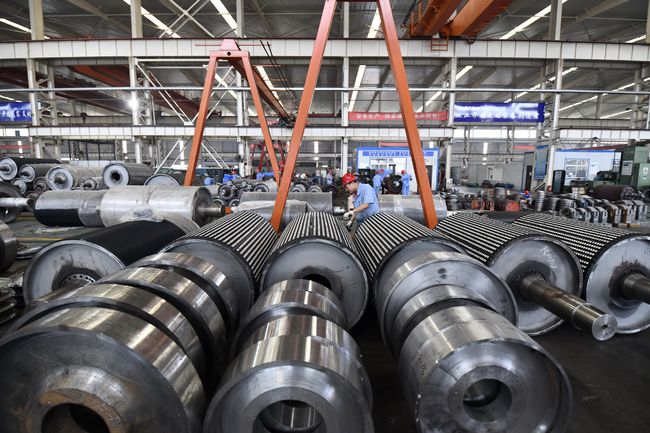 加工设备
加工设备
 摩擦试验机
摩擦试验机
 大型表征仪器
 小型测试设备