Heat treatment technology changes all the mechanical properties of metallic materials. The influence of induction hardening, nitriding and boronising on the change in the microhardness, impact toughness, microstructure and coefficient of friction of conventional steels 42CrMo4 and 32CrMo12 has been examined and compared with results obtained in the sintered steels with an increased content of Cu, which were prepared using powder metallurgy technology. Widely used treatments for the examined materials include induction hardening and gas nitriding. This study focuses on comparing those technologies with alternative technologies of boronising. It was found that for powder metallurgy materials, boronising is a much more suitable process than nitriding because after the application of nitriding, the impact toughness dropped to one third of the impact toughness of the base material, while after boronising, the impact toughness remained unchanged. Through boronising, it was possible to achieve the unique possibility of improving the mechanical properties of sintered PM Fe-Cu-C steels and fully replacing the currently used nitriding process. Furthermore, compared to nitriding, it also increases the hardness of the surface layer many times to improve the friction properties and significantly increases the impact toughness.
周老师: 13321314106
王老师: 17793132604


邮箱号码: lub@licp.cas.cn




 润滑剂
润滑剂
 润滑油添加剂
 自润滑材料
自润滑材料
 密封材料
密封材料
 新兴材料
新兴材料
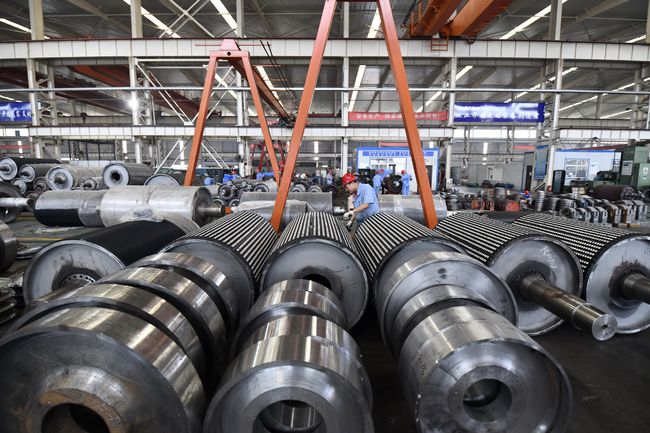 加工设备
加工设备
 摩擦试验机
摩擦试验机
 大型表征仪器
 小型测试设备