This study explores the dual-mode wear behaviour of GFRP nanocomposites reinforced simultaneously with two nanoclays, ‘PGV’ (platelet-type) and ‘HNT’ (halloysite nanotube-tubular-type), under dry abrasion and pin-on-disc sliding conditions. Eight formulations were developed by varying PGV:HNT weight ratios while maintaining a total nanoclay loading of 2 phr (parts per hundred resin) in any formulation. The sliding wear behavior and coefficient of friction were evaluated using a pin-on-disc tribometer (ASTM G99-17) with a hardened EN31 steel pin (HRC 60, 8 mm diameter) as the counterface. Abrasive wear was assessed through a dry sand abrasion test using a DUCOM TR-50-M7 rig, where a chlorobutyl rubber-coated steel wheel acted as the counterface in the presence of controlled silica sand particles (200-500 μm). Preliminary factorial screening was used to identify the most aggressive wear parameters for both tests, which were then applied to all the samples. The PGV only sample (P2) exhibited maximum wear in both conditions, confirming its poor resistance to abrasive and sliding forces. In contrast, ‘P5H3’ composite (PGV:HNT :: 1.25:0.75) showed the lowest mass loss in dry abrasion, while ‘P1H3’ formulation (PGV:HNT :: 0.5:1.50) exhibited the best wear performance in pin-on-disc testing. The hybrid two-clay formulations outperformed the single clay counterparts, attributed to synergistic effects viz. enhanced dispersion and interfacial reinforcement. SEM-EDS analysis revealed uniform nanoclay integration, and XRD and TEM analysis confirmed partial exfoliation. The transition from brittle wear in the ‘P2’ sample to stabilized wear tracks in hybrid systems highlights the efficacy of combining morphologically distinct nanoclays for enhancing wear durability in Glass fiber-reinforced polymer (GFRP) composites under severe abrasive and sliding conditions.
周老师: 13321314106
王老师: 17793132604


邮箱号码: lub@licp.cas.cn





 润滑剂
润滑剂
 润滑油添加剂
 自润滑材料
自润滑材料
 密封材料
密封材料
 新兴材料
新兴材料
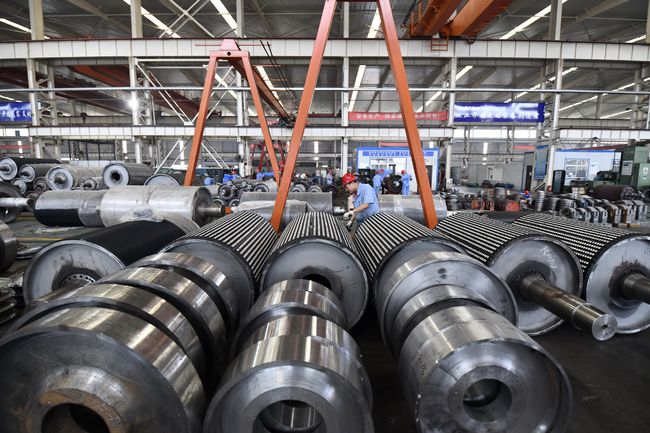 加工设备
加工设备
 摩擦试验机
摩擦试验机
 大型表征仪器
 小型测试设备