Dispersion of multi-walled carbon nanotubes (MWCNTs) in lithium grease remains a major challenge due to their strong tendency to agglomerate, driven by Van der Waals attractions between the nanotubes. Acid functionalization combined with ultrasonication promotes more homogeneous and efficient dispersion but may also cause structural damage to MWCNTs through cavitation, leading to nanotube shortening and alteration of their surface properties. This study evaluates the effect of different ultrasonication durations on the dispersion quality of acid-functionalized MWCNTs as additives in lithium grease, aiming to determine the optimal ultrasonication time that enhances distribution and compatibility within the grease matrix while preserving structural integrity. MWCNTs were functionalized using a 3:1 mixture of sulfuric acid (H₂SO₄) and nitric acid (HNO₃) and ultrasonicated for 15 min, 1 h, 2 h, and 4 h. After neutralization with NaOH, their structural integrity and dispersion quality were analyzed. FTIR spectroscopy confirmed successful functionalization through the appearance of oxygen-containing functional groups. Raman spectroscopy showed an increasing I D/I G ratio with longer sonication durations, indicating a gradual rise in structural disorder. Dispersion tests and zeta potential measurements revealed that the 1-h and 2-h samples exhibited superior colloidal stability (−26.62 mV and − 26.71 mV, respectively) compared to the 15-min and 4-h samples. Both remained well-dispersed after 30 days, demonstrating strong electrostatic stabilization. In contrast, the 15-min sample showed insufficient functionalization, while the 4-h sample experienced structural degradation that reduced its effectiveness. FE-SEM analysis further confirmed that the 1-h sample retained its tubular morphology with minimal agglomeration, whereas the 2-h sample exhibited partial tube deformation. Tribological analysis revealed that grease containing 1-h functionalized MWCNTs achieved the lowest and most stable coefficient of friction (COF) of approximately 0.15–0.20, along with the smallest wear scar diameter (704.40 μm), indicating enhanced lubrication and wear protection. The 4-h sample, in contrast, displayed severe wear and unstable COF, likely due to nanotube fragmentation and re-agglomeration. Electrical conductivity analysis showed that grease containing 1-h functionalized MWCNTs achieved the highest conductivity (1.24 × 10 −8 S/m), confirming efficient charge transport through a well-connected conductive network. Pristine and over-sonicated samples, however, exhibited much lower conductivity as a result of poor dispersion and structural damage. This study highlights the importance of optimizing ultrasonication duration during acid functionalization to balance surface modification and structural preservation. Overall, 1-h ultrasonication was identified as the optimal condition, achieving stable dispersion, superior tribological performance, and high electrical conductivity while maintaining the structural integrity of MWCNTs.
周老师: 13321314106
王老师: 17793132604


邮箱号码: lub@licp.cas.cn




 润滑剂
润滑剂
 润滑油添加剂
 自润滑材料
自润滑材料
 密封材料
密封材料
 新兴材料
新兴材料
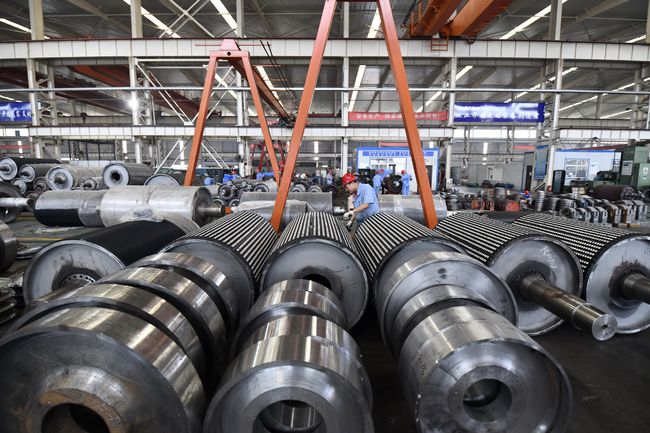 加工设备
加工设备
 摩擦试验机
摩擦试验机
 大型表征仪器
 小型测试设备