Surface texture acts as a critical fingerprint of tribological performance, encoding information about both manufacturing origins and in-service wear. However, existing statistical models often fail to physically decompose surface topography into its constituent components, particularly for non-Gaussian deterministic profiles. This study addresses a specific gap in the characterization of piston skirt surfaces, which are frequently machined to exhibit a parabolic roughness character. For such surfaces, established decomposition models like the uniform–Gaussian framework are physically inadequate. This paper introduces a deterministic–Gaussian decomposition framework, instantiated here with a parabolic deterministic term tailored to turned piston skirts. While we demonstrate the parabolic case in detail (with a closed-form derivation in the Appendix), the same construction applies to other tool-imprint profiles by substituting the deterministic density , yielding a general route to two-process surface decomposition. The proposed model expresses the surface height probability density as a mixture of: a deterministic parabolic distribution, representing the machining‑induced valleys, and a stochastic Gaussian distribution, representing the wear-induced plateau. This approach generalizes previous two-process methodologies by explicitly accounting for the specific parabolic morphology imparted by the manufacturing process. The model is validated using measured surface data. The results confirm that the parabolic–Gaussian composite provides a physically consistent characterization of the unworn surface. Furthermore, when applied to worn surfaces, the model enables accurate reconstruction of the initial profile geometry and quantifies tribologically functional parameters, such as the plateau roughness and local wear depth. The decomposition yields direct insight into run-in wear mechanisms by separating the material share lost due to wear from the persistent original profile. The study concludes that the proposed framework offers a superior and functionally relevant tool for the analysis of surfaces with parabolic deterministic motifs, with direct implications for predicting load-carrying capacity, lubrication retention, and wear progression in sliding contacts.
周老师: 13321314106
王老师: 17793132604


邮箱号码: lub@licp.cas.cn





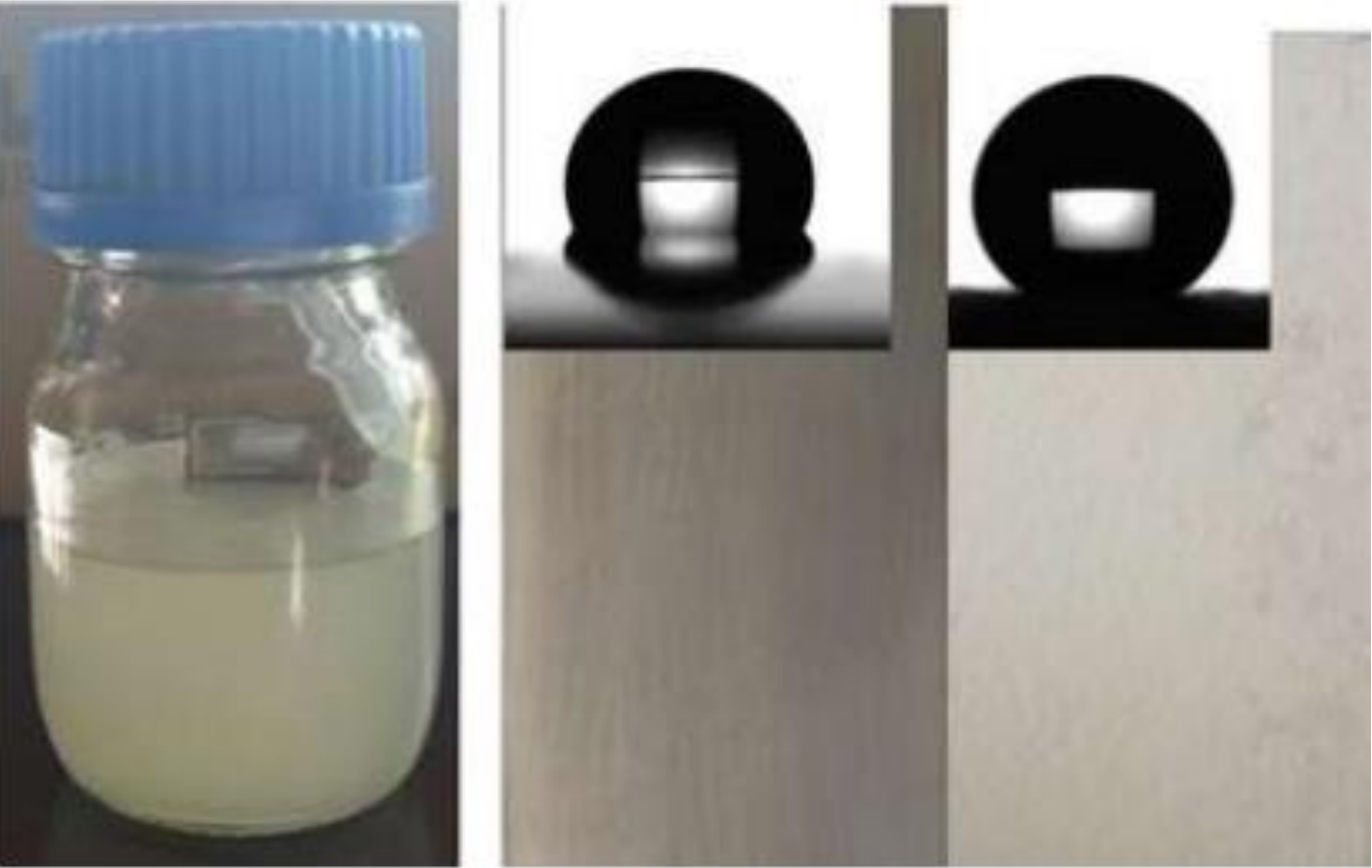
 润滑剂
润滑剂
 润滑油添加剂
 自润滑材料
自润滑材料
 密封材料
密封材料
 新兴材料
新兴材料
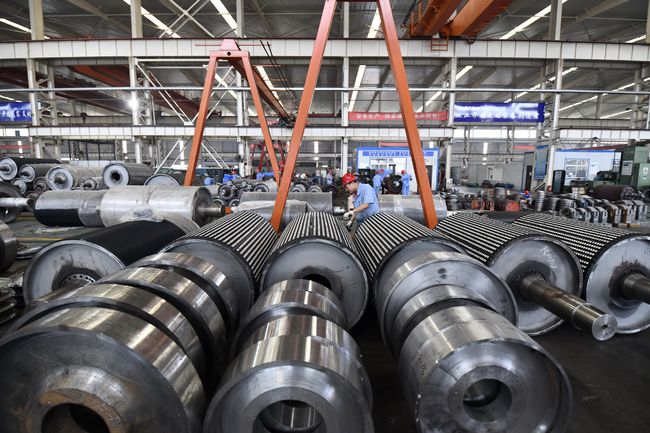 加工设备
加工设备
 摩擦试验机
摩擦试验机
 大型表征仪器
 小型测试设备