Different coating processes have been used to improve the wear and erosion resistance of titanium alloys. Among other techniques, thermal oxidation, as a simple and environmentally friendly method, increases the surface and near-surface hardness and improves the tribological behavior of titanium alloys. Atmospheric heat treatment of titanium results in the formation of a hard oxygen diffusion layer (ODL) covered by a brittle titanium oxide. In this paper, the ultrasonic cavitation erosion behavior of ODL on the surface of commercially pure titanium is investigated. Following heat treatment at 900°C in an atmospheric furnace, the ODL surfaces were subjected to varying degrees of mechanical grinding to achieve target surface hardness levels of approximately 1000, 800, 600, 400, and 200 HV. Mass loss measurements revealed that the enhanced surface hardness of 1000 HV leads to higher mass loss during the initial stages of cavitation erosion. Conversely, reducing the surface hardness from 1000 HV to 800 HV resulted in a 90% decrease in mass loss compared to the untreated sample. SEM observations revealed limited spallation on the eroded surface, suggesting that ODL with a surface hardness of 800 HV achieved a favorable balance between high hardness and adequate ductility, thereby providing high resistance against cavitation erosion damage. Although the samples with a surface hardness of 600 HV and 400 HV showed improved cavitation resistance compared to untreated samples, these hardness levels exhibit significantly greater damage than samples with a surface hardness of 800 HV.
周老师: 13321314106
王老师: 17793132604


邮箱号码: lub@licp.cas.cn




 润滑剂
润滑剂
 润滑油添加剂
 自润滑材料
自润滑材料
 密封材料
密封材料
 新兴材料
新兴材料
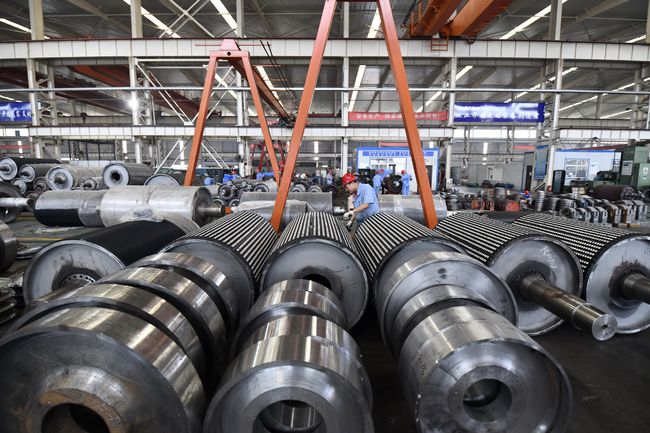 加工设备
加工设备
 摩擦试验机
摩擦试验机
 大型表征仪器
 小型测试设备