Here we studied the aqueous transport of different alkali-metal ions in charged boron nitride nanotubes (BNNTs) and compared the results with those obtained in carbon nanotubes, using macroscopic, vertically aligned nanotube membranes at densities up to 107 pores cm−2. Our study reveals that ion transport in 3- and 12-nm-diameter charged BNNTs is fundamentally different from that in either carbon nanotubes of a similar size, or two-dimensional boron nitride nanochannels. We find two unexpected transport phenomena: ultrafast, cation-selective diffusion that exceeds Fickian diffusion up to 31-fold; and preferentially enhanced transport rates for Li+ over other alkali-metal ions (K+ and Na+) that are opposite to the ordering of their mobilities in bulk solution. We show that the overall fast transport of cations is due to diffusio-osmotic surface transport, while the preferentially enhanced transport of Li+ is believed to result from ion-specific interactions with the charged BNNTs. As a result of enhanced and cation-selective transport, the BNNT membranes produced per-pore osmotic-power densities up to 15,300 W m−2 in a 1 mM:1 M LiCl concentration gradient at pH 11. The energy-conversion efficiency approached the theoretical limit of 50% at pH 5.5. As a demonstration, we power a calculator, watch and light-emitting diode using 1-cm2 BNNT membranes in a salinity gradient. The unusual transport phenomena in BNNTs, as well as the flexible and scalable membrane-fabrication process, may enable ion-selective nanotube membranes optimized for lithium recovery, ‘blue’ osmotic energy and other separation and energy-conversion processes.
周老师: 13321314106
王老师: 17793132604


邮箱号码: lub@licp.cas.cn





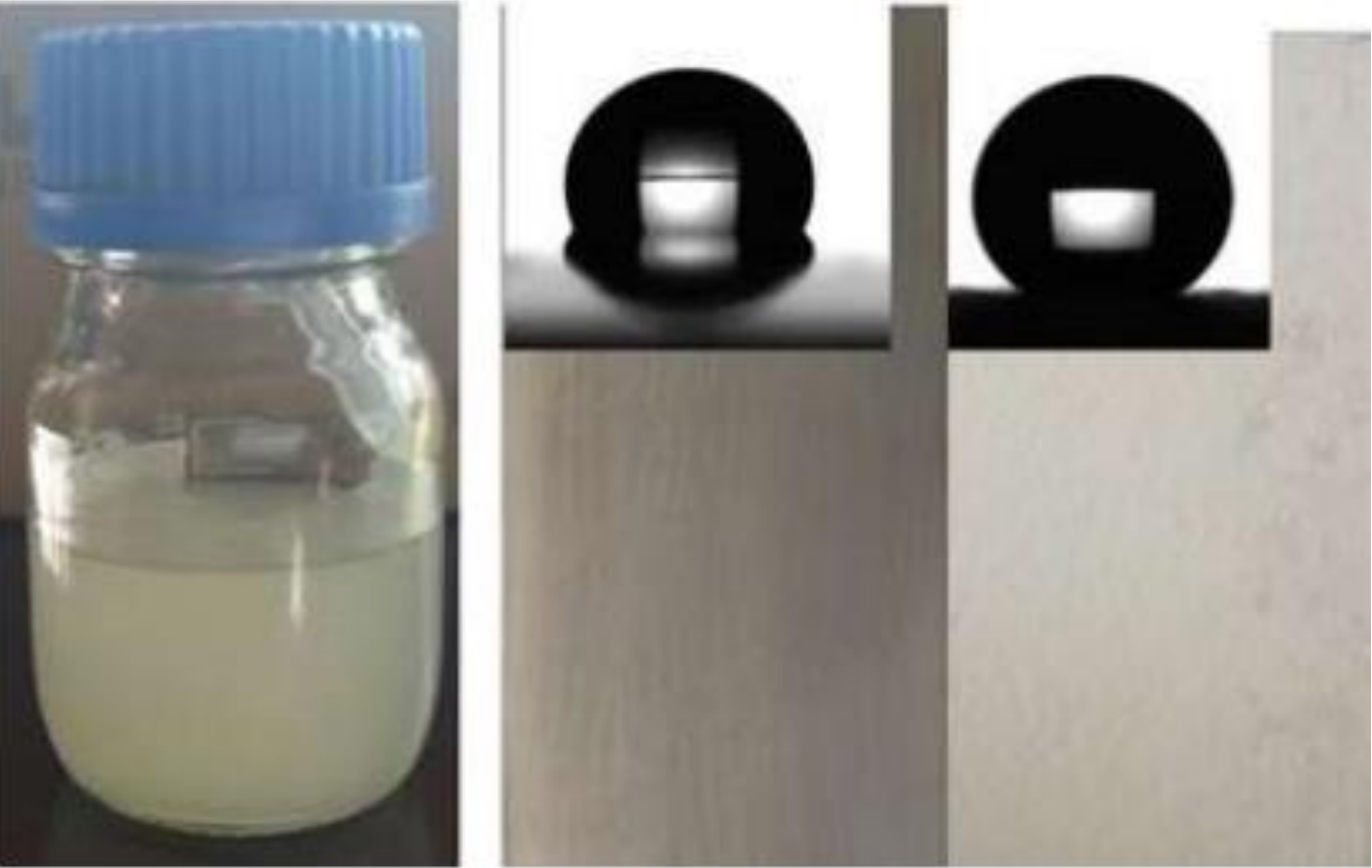
 润滑剂
润滑剂
 润滑油添加剂
 自润滑材料
自润滑材料
 密封材料
密封材料
 新兴材料
新兴材料
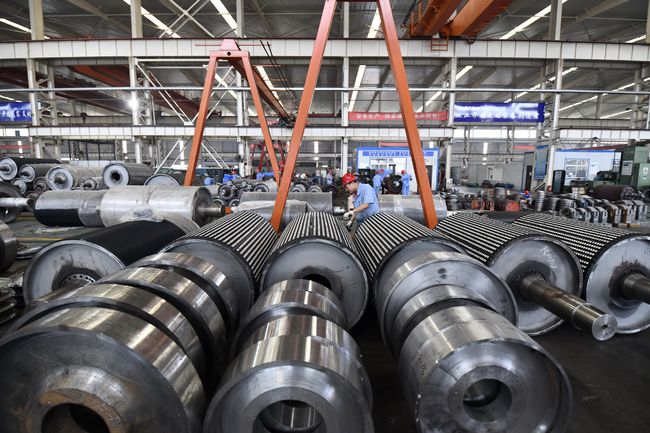 加工设备
加工设备
 摩擦试验机
摩擦试验机
 大型表征仪器
 小型测试设备