The energy produced by the non-renewable resources is facing challenges due to high energy consumption. So, to compensate this depletion in energy production, scientists are focusing on the production of energy from renewable sources like solar energy, etc. The current study is concentrated to the solar energy enhancement which can be achieved by improving the efficiency of the energy producing devices like solar thermal collectors and photovoltaic-thermal systems by passing the ternary nanofluid in these energy producing systems. The present work deals with the Maxwell ternary nanofluid flow and heat transfer past inclined linearly permeable stretching sheet embedded in porous media. Effects of Lorentz force, solar radiation and suction of the surface are incorporated into the current mechanism. The entropy generation analysis is carried out to optimize the cooling process inside the thermal systems. The solutions of the transformed ordinary differential equations are computed using boundary value problem 4th order collocation technique-based solver. The results indicate the increasing nanoparticles volume fraction enhances temperature of fluid and controls velocity of fluid. Growing Maxwell fluid parameter and magnetic field parameter reduces the velocity of the fluid and raises the temperature of the fluid as well solar radiation improves the temperature of the fluid flow domain. The suction parameter controls the boundary layer thickness. The increasing Brinkman number enhances entropy generation and decreases Bejan number. The numerical computations were performed using boundary value problem 4th order collocation technique-based solver for different ranges of the dimensionless parameters, namely, 0.6 ≤ Br ≤ 1.0, 0.1 ≤ S ≤ 1.5, 1.1 ≤ M ≤ 6.1, 0.1 ≤ λ ≤ 0.9, 0.01 ≤ ϕ1, ϕ2, ϕ3 ≤ 0.05, 0.1 ≤ λ1 ≤ 3.1, 1.0 ≤ Pr ≤ 7.0, 1.1 ≤ Rd ≤ 6.1, 0.1 ≤ K ≤ 5.1, 0.1 ≤ α1 ≤ 0.5 and α = π/6. Sensitivity analysis to determine the variations in output by changing the parameters as input. The grid independent test has been carried out to guarantee grid independent convergence of the numerical solutions. Recent results are equated with already existing outcomes for the validation of the present modeled code. Graphical abstract
周老师: 13321314106
王老师: 17793132604


邮箱号码: lub@licp.cas.cn





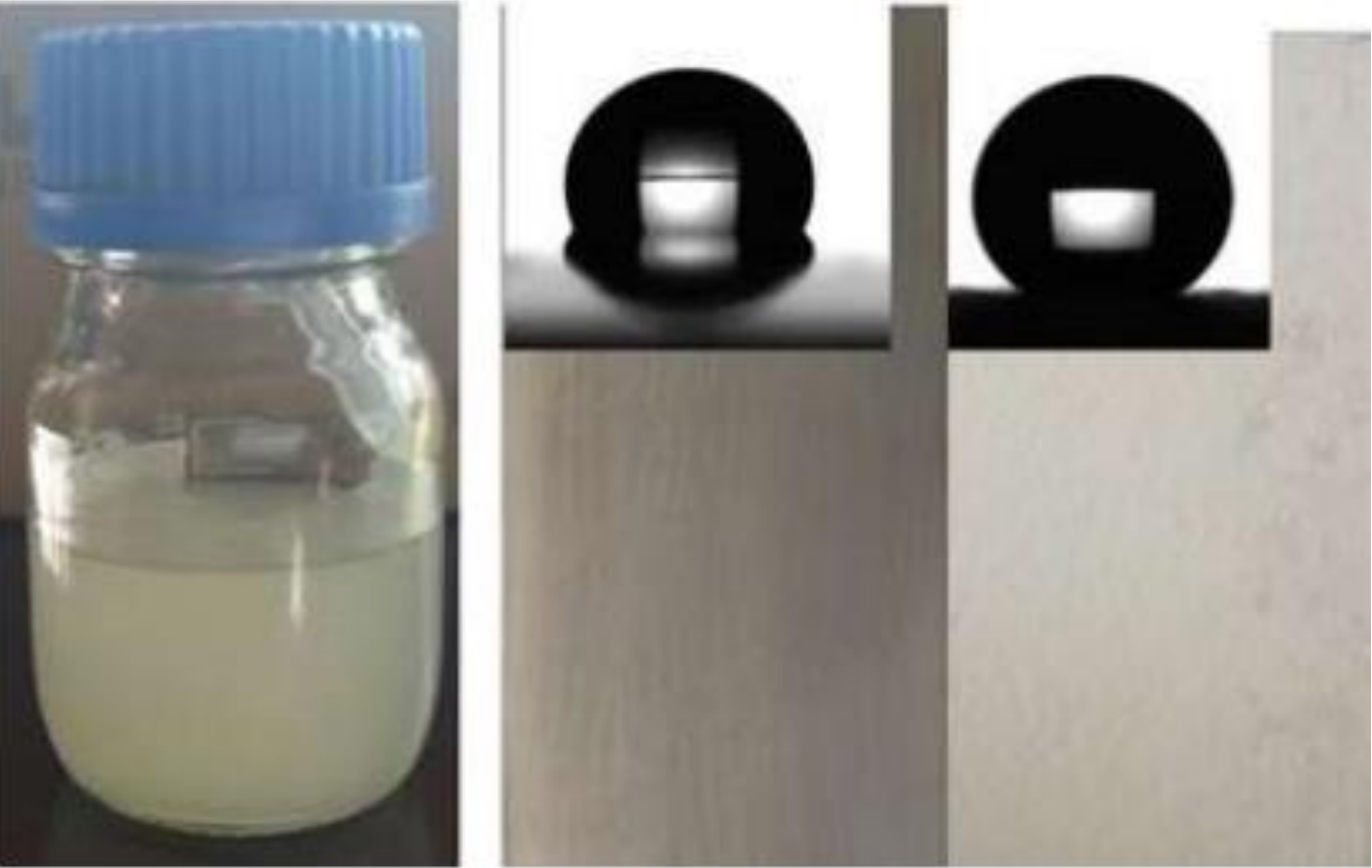
 润滑剂
润滑剂
 润滑油添加剂
 自润滑材料
自润滑材料
 密封材料
密封材料
 新兴材料
新兴材料
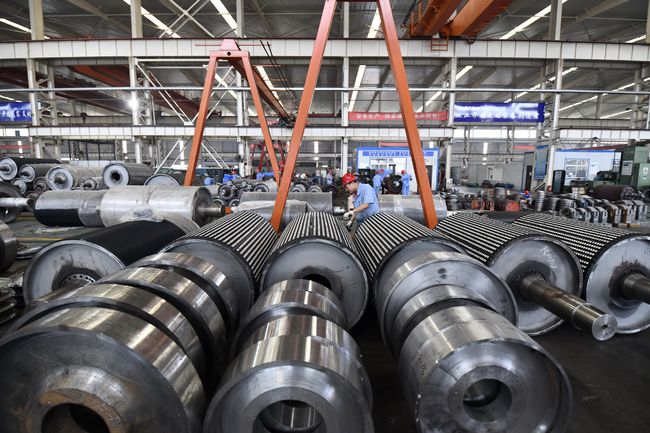 加工设备
加工设备
 摩擦试验机
摩擦试验机
 大型表征仪器
 小型测试设备