In response to the need for in-situ repair of deep cracks in a naval ship, a 4 mm-deep 30° U-shaped groove was prepared on 921A steel. Groove filling experiments were conducted using local dry underwater oscillating laser wire feed welding under the conditions of air and shallow water. The microstructure and properties of the welds were analyzed. The results indicate that sound welds without significant defects are obtained in both air and shallow water. Owing to the effective shielding gas protection within the local dry cavity and the rapid cooling effect underwater, the shallow water weld exhibits a bright white surface with densely distributed fish-scale patterns. The air weld includes a higher fraction of acicular ferrite, whereas the rapid cooling in water promotes the formation of lath martensite. The main alloying elements under both environments exhibit a smooth transition near the fusion lines with good metallurgical bonding. However, due to the higher cooling rate in the shallow water compared with that in air, there is a greater fluctuation in elemental distribution, along with higher contents of Si, Mn, and Mo and a slightly lower Cr content in the shallow water weld. The shallow water weld shows higher overall hardness than the air weld, though the hardness distribution trends across different zones are similar in both cases. Tensile tests reveal that fracture occurs in the base metal under both environments, with the tensile strength and yield strength ranking as follows: shallow water weld>air weld>base metal. However, electrochemical corrosion tests indicate that the shallow water weld has inferior corrosion resistance compared to the air weld.
周老师: 13321314106
王老师: 17793132604


邮箱号码: lub@licp.cas.cn





 润滑剂
润滑剂
 润滑油添加剂
 自润滑材料
自润滑材料
 密封材料
密封材料
 新兴材料
新兴材料
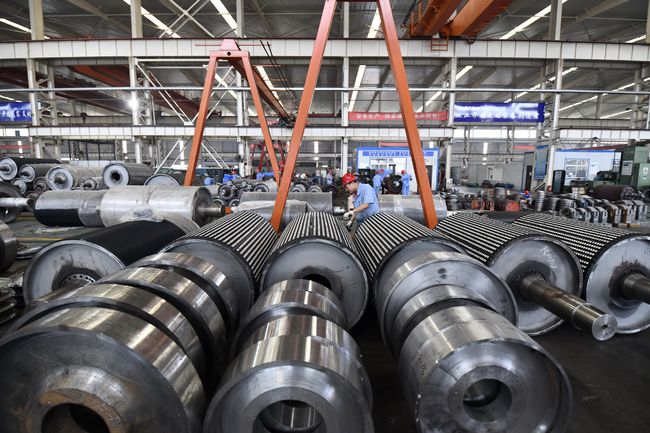 加工设备
加工设备
 摩擦试验机
摩擦试验机
 大型表征仪器
 小型测试设备