Sustainability, resilience and circularity have become central challenges for modern materials science. Advanced materials underpin clean energy technologies, digital infrastructure and healthcare systems, yet their development remains dominated by a linear conduct of design, production, use and disposal. Despite progress in recycling and upcycling, these strategies are often inefficient, energy-intensive and difficult to scale, and are poorly matched to the urgency of climate change and resource constraints. Artificial intelligence (AI) has reshaped materials research through rapid property prediction, high-throughput screening and data-driven synthesis planning1. However, these advances prioritize performance optimization, with environmental impacts, recyclability and end-of-life behaviour addressed only post-development, leading to new waste streams or environmental burdens upon scale-up. Despite rapid expansion, AI applications in sustainability are mostly technical and insufficiently embedded in life-cycle thinking, revealing a systemic gap in sustainability outcomes2. Here, we propose that AI can move beyond its role as a discovery accelerator to enable sustainable, circular materials systems. Figure 1 illustrates this AI-enabled circular economy framework, in which AI operates at the centre of the material life cycle, linking life-cycle assessment (LCA), synthesis and testing, production, retail, product use, analysis and sorting, and recycling. Recovered materials are reintegrated into production, forming a closed loop in which AI continuously optimizes efficiency, resource recovery and environmental performance. Fig. 1: Artificial intelligence as the orchestrator of circular materials systems. Full size image Schematic illustration of artificial intelligence (AI) as an accelerator of sustainability and materials circularity.
周老师: 13321314106
王老师: 17793132604


邮箱号码: lub@licp.cas.cn





 润滑剂
润滑剂
 润滑油添加剂
 自润滑材料
自润滑材料
 密封材料
密封材料
 新兴材料
新兴材料
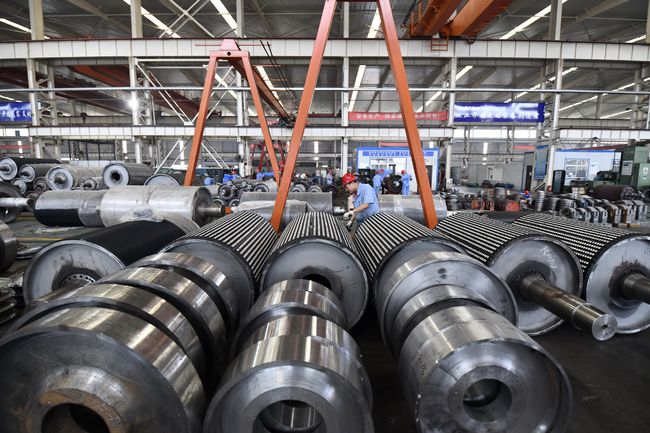 加工设备
加工设备
 摩擦试验机
摩擦试验机
 大型表征仪器
 小型测试设备