To address challenges in the surface defect detection of core Aerospace Engine components, specifically targeting texture aliasing under strong metallic backgrounds and the difficulty in identifying cross-scale minute defects such as tiny dots, this paper proposes CAM-RTDETR, a detection model based on an improved RT-DETR-r18. First, to accommodate the irregular geometry of blades, a C2f-DBlock backbone based on Multi-Branch Dilated Convolutions is designed to effectively decouple defect features from the rigid background grid. Second, a Texture-Sensitive Self-Attention (AIFI-TSSA) module is introduced into the Encoder, incorporating learnable texture biases to suppress the interference of high-frequency metallic grain noise. Finally, a Mixed Aggregation Network (MANet) is adopted to replace the standard fusion module, utilizing a multi-branch structure to preserve the faint signals of minute defects during feature fusion. Experimental results on a self-constructed Aerospace Engine defect dataset indicate that, while maintaining real-time performance, the proposed method reduces parameter count by 21.5% and computational cost (GFLOPs) by 16.1% compared to the baseline RT-DETR-r18. Furthermore, it achieves a 1.7% increase in mAP@0.5–0.95 and a 4.0% increase in Precision. Compared with mainstream YOLO series models, the method demonstrates significant performance advantages in detecting minute defects and low-contrast scratches.
周老师: 13321314106
王老师: 17793132604


邮箱号码: lub@licp.cas.cn





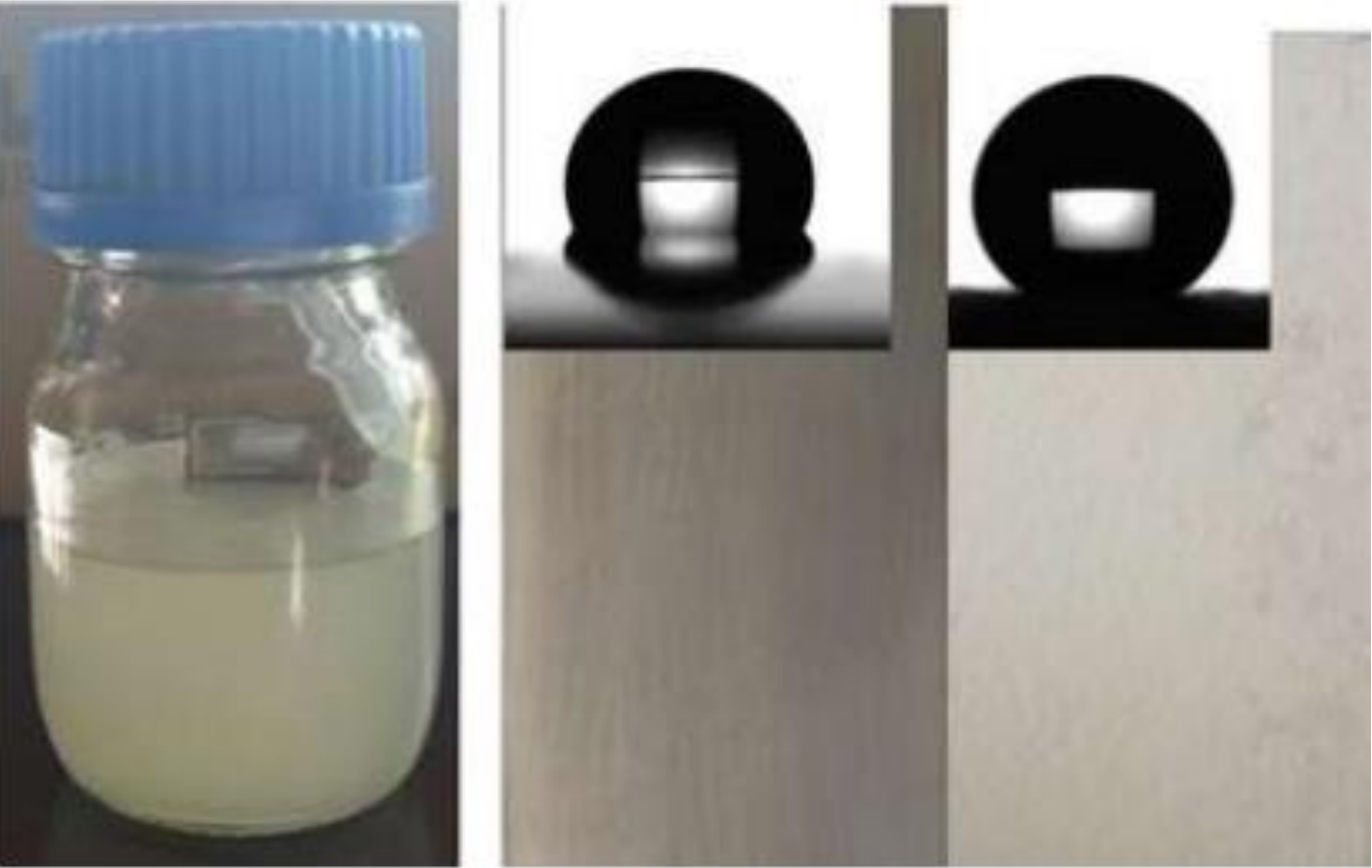
 润滑剂
润滑剂
 润滑油添加剂
 自润滑材料
自润滑材料
 密封材料
密封材料
 新兴材料
新兴材料
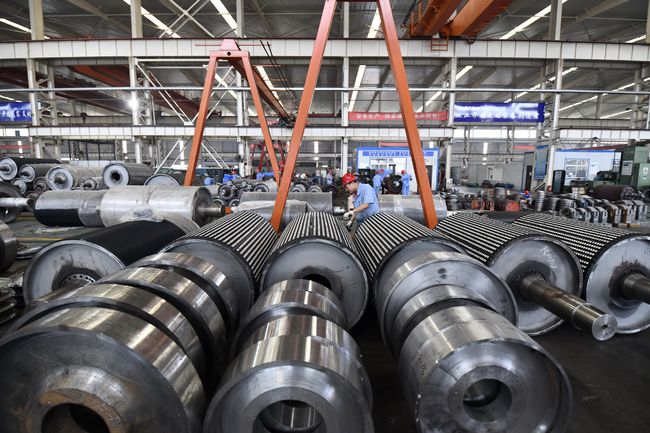 加工设备
加工设备
 摩擦试验机
摩擦试验机
 大型表征仪器
 小型测试设备