Thermal barrier coatings (TBCs) protect turbine engine components allowing them to operate at high temperatures, significantly improving turbine power and fuel efficiency. Suspension plasma spraying (SPS), allows the creation of columnar microstructures with controlled porosity, thermal stresses, and lower thermal conductivity. However, the major challenge for the columnar structure is that it facilitates the penetration of calcium–magnesium–alumino-silicates (CMAS), which leads to TBC deterioration. To mitigate this, a laser post-treatment process has been proposed to re-melt the top layer of TBCs. In this study, columnar yttria-stabilized zirconia (8YSZ) topcoats were deposited by axial SPS. A CO2 laser treatment was used to create a re-melted layer at the surface of the SPS coatings. The influence of key laser parameters, such as scanning speed and laser power, on the microstructure of the re-melted top layer of the columns in the SPS coatings was investigated. Also, the micro-hardness, crack network and phase analysis of the laser re-melted layer were studied. The study showed that increasing the scanning speed increased the width of cracks of re-melted zone of TBC. Additionally, the laser glazing decreased surface roughness, sealed open porosity, produced a dense microstructure, and increased micro-hardness. The phase composition remained stable (metastable tetragonal (t′) phase) for both as-sprayed and laser-glazed samples.
周老师: 13321314106
王老师: 17793132604


邮箱号码: lub@licp.cas.cn




 润滑剂
润滑剂
 润滑油添加剂
 自润滑材料
自润滑材料
 密封材料
密封材料
 新兴材料
新兴材料
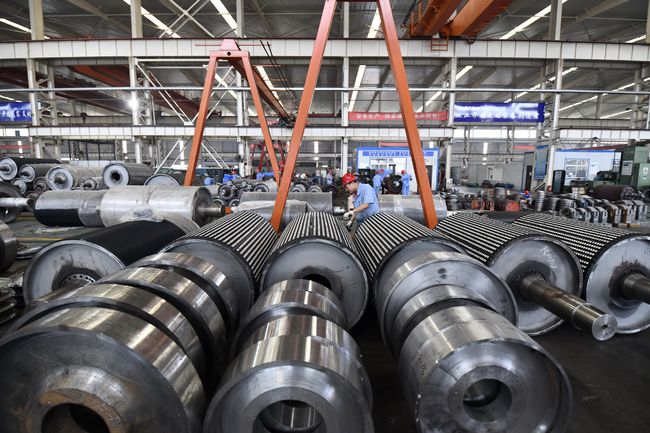 加工设备
加工设备
 摩擦试验机
摩擦试验机
 大型表征仪器
 小型测试设备