As supercritical carbon dioxide (S-CO2) Brayton cycles advance toward higher power densities, the lubrication and dynamic characteristics of support bearings are critical to the stability of turbine rotor systems. This paper presents a numerical approach that combines the full-variable frequency perturbation method with the equivalent coefficient method to predict the equivalent dynamic stiffness and damping coefficients of S-CO2 tilting pad bearings. The method captures the evolution of dynamic coefficients over the entire frequency range and determines their high-frequency limiting characteristics through a limiting-process analysis. The limiting perturbation pressure solution shows that the high-frequency limiting coefficients are explicitly governed by the steady-state density ρ ¯ 0 and the compressibility term ∂ p ¯ ρ ¯ ( p ¯ 0 , T ¯ 0 ) , which distinguishes them from conventional gas-lubricated bearings. Furthermore, the effects of pad inertia, pivot offset ratio, static load configuration, and ambient parameters on bearing dynamics are systematically analyzed. The results show that S-CO2 tilting-pad bearings exhibit a characteristic stiffness-hardening and damping-vanishing behavior at high frequencies. Pad inertia reduces direct stiffness and amplifies cross-coupled stiffness at high frequencies, while enhancing damping near synchronous frequencies. Moreover, the influence of ambient parameters on the dynamic characteristics strongly depends on the thermodynamic region, with the pseudo-critical and stable supercritical zones showing distinct trends. The proposed approach offers an effective framework for analyzing the rotor dynamics and stability of S-CO2 turbine systems.
周老师: 13321314106
王老师: 17793132604


邮箱号码: lub@licp.cas.cn





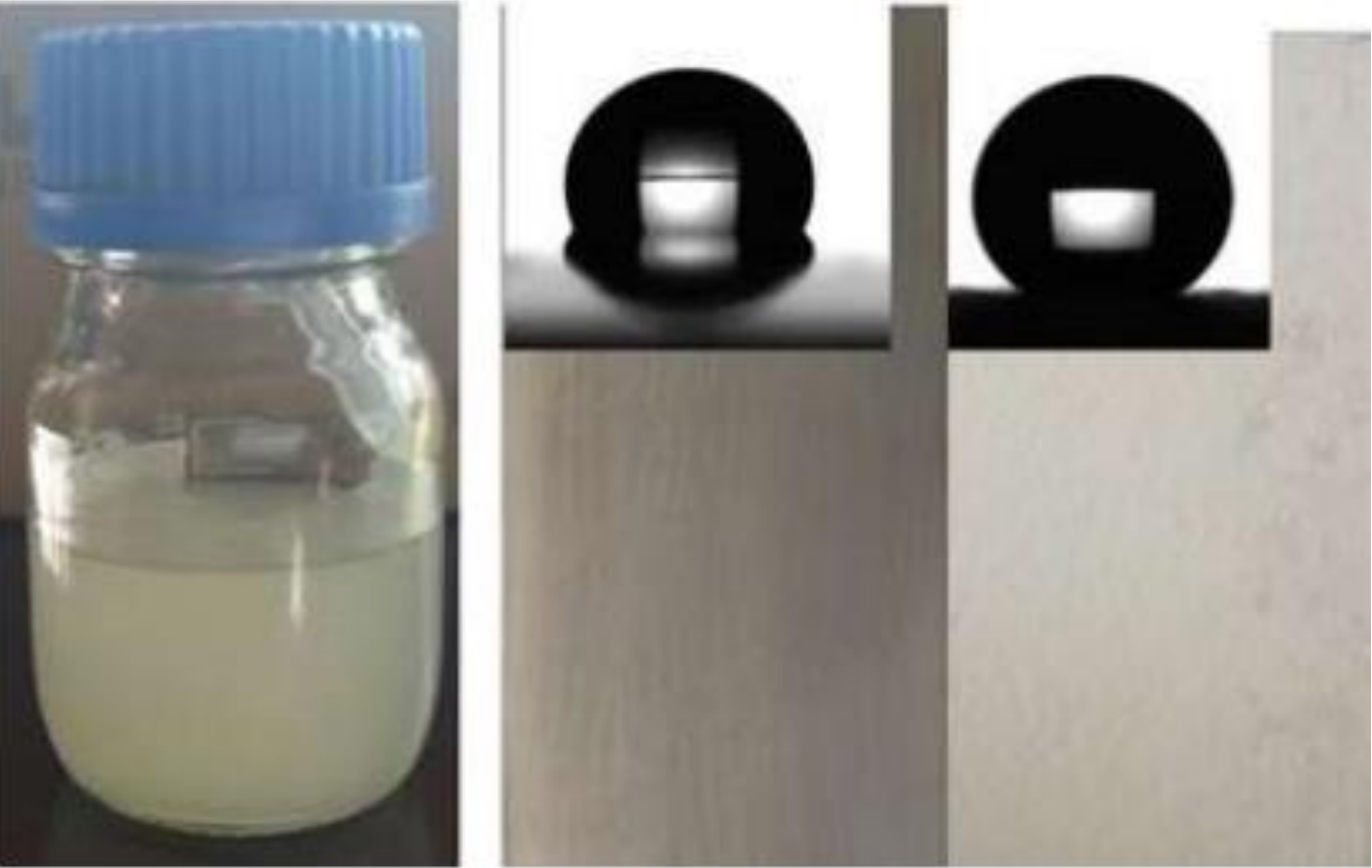
 润滑剂
润滑剂
 润滑油添加剂
 自润滑材料
自润滑材料
 密封材料
密封材料
 新兴材料
新兴材料
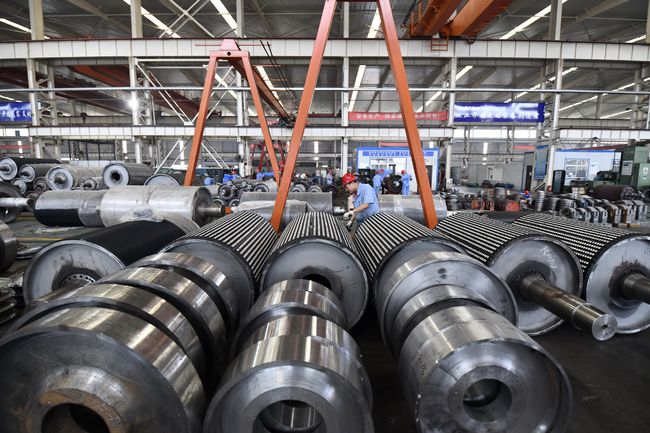 加工设备
加工设备
 摩擦试验机
摩擦试验机
 大型表征仪器
 小型测试设备