The development of infrared engineering technologies for extreme environments remains a formidable challenge due to the inherent trade-offs among optical performance, thermal stability, and mechanical integrity in thermal photonic metamaterials (TPMs). This work introduces a novel multi-objective design framework and demonstrates the design, fabrication, and validation of a TPM operating under extreme temperatures up to 1873 K. We have established a holistic design framework integrating temperature-dependent neural network and Pareto multi-objective optimization to co-optimize spectral response, component light-weighting, and structural efficiency. The framework achieves 100 times faster computation than genetic algorithms. The performance of the designed TPM was evaluated under various atmospheric models and detection distances. The TPM achieved a peak radiance suppression efficiency of 82% and a maximum attenuation of − 7.4 dB at 1200–1500 K. Experimentally, we fabricated an all-dielectric TPM using a refractory TiO2/BeO multilayer stack with only 5 layers and 2 μm total thickness. The optimized structure shows high reflectivity (0.62 at 3–5 μm; 0.48 at 8–14 μm) for radiative suppression and high emissivity (0.87 at 5–8 μm) for radiative cooling. The TPM withstands 1873 K for 12 h in air with less than 3% spectral drift, retaining excellent mechanical properties. On high-temperature components, it achieves 40–50% radiative suppression and 40–60 K (~ 10.1 kW m−2) radiative cooling at 1100 K, endures over 20 times thermal shock cycles (> 150 K s−1, 700–1500 K), and maintains stable performance over 5 cycles, with 78% visible and 98% microwave transmittance. This work establishes a new paradigm in the design and application of photonic materials for extreme environments.
周老师: 13321314106
王老师: 17793132604


邮箱号码: lub@licp.cas.cn




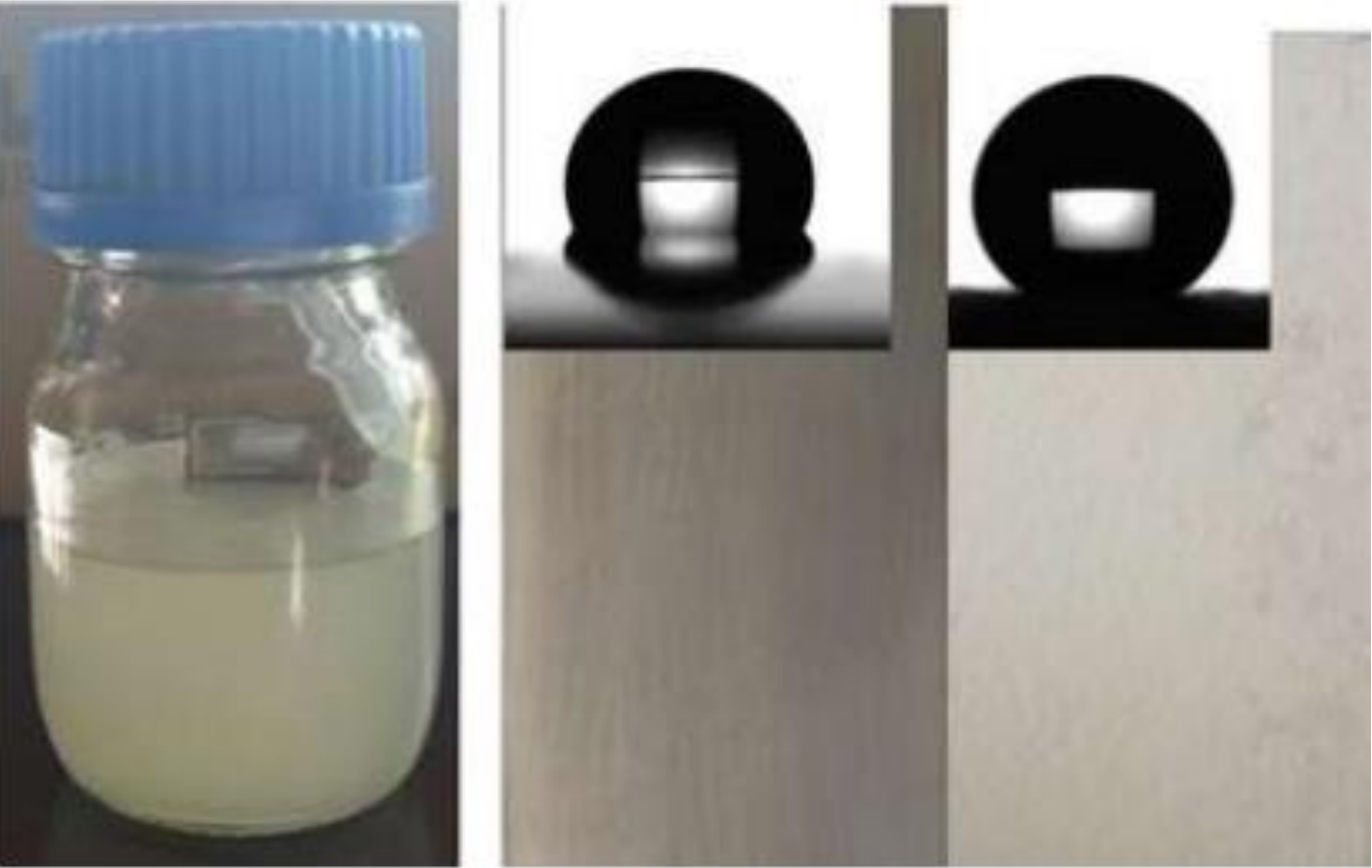
 润滑剂
润滑剂
 润滑油添加剂
 自润滑材料
自润滑材料
 密封材料
密封材料
 新兴材料
新兴材料
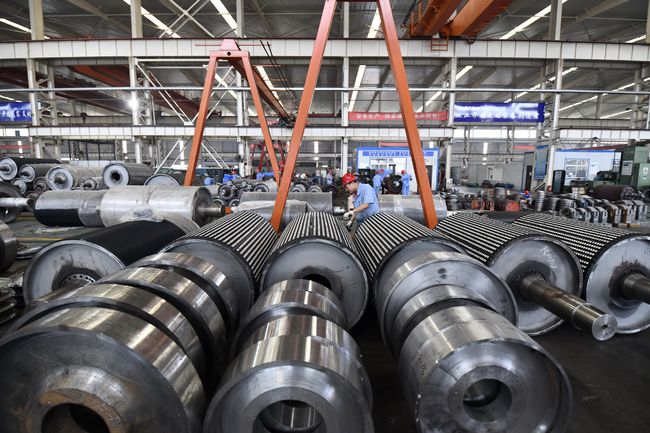 加工设备
加工设备
 摩擦试验机
摩擦试验机
 大型表征仪器
 小型测试设备