The thermodynamic performance of a tapered roller bearing is governed by the irreversible dissipation within its lubricating film. Minimizing the total entropy generation rate, which arises from fluid friction and heat transfer, is paramount for enhancing mechanical efficiency and operational longevity. This study conducts a numerical investigation into the entropy optimization of a nanoparticle-enhanced Sutterby lubricant within a rough-walled, tapered bearing geometry. The flow is modeled using the continuity, momentum, and energy equations, coupled with an entropy transport equation. The non-Newtonian lubricant behavior is characterized by the Sutterby fluid model, with its shear-thinning intensity governed by the Weissenberg number (Wi" role="presentation"> W i ). The analysis focuses on the influence of key dimensionless parameters: the Reynolds number, the Hartmann number for magneto-hydrodynamic effects, and a defined surface roughness parameter. The analysis demonstrates that the total entropy generation, comprising frictional and thermal contributions is highly sensitive to the converging-diverging geometry. It is found that increasing the Weissenberg number significantly reduces the Bejan number, indicating a shift from thermal to viscous flow irreversibility dominance. Furthermore, the nanoparticle volume fraction directly enhances thermal transport, reducing the temperature gradient contribution to entropy generation. Optimal conditions for minimizing entropy are identified for specific combinations of Reynolds number, Weissenberg number and surface roughness. The results provide a rigorous thermodynamic framework for optimizing tapered bearing performance. By quantifying the interplay between rheology, inertia, and surface texture on the entropy generation map, this work establishes design criteria for minimizing irreversibility. This enables the development of high-efficiency lubrication systems utilizing advanced non-Newtonian nano lubricants.
周老师: 13321314106
王老师: 17793132604


邮箱号码: lub@licp.cas.cn




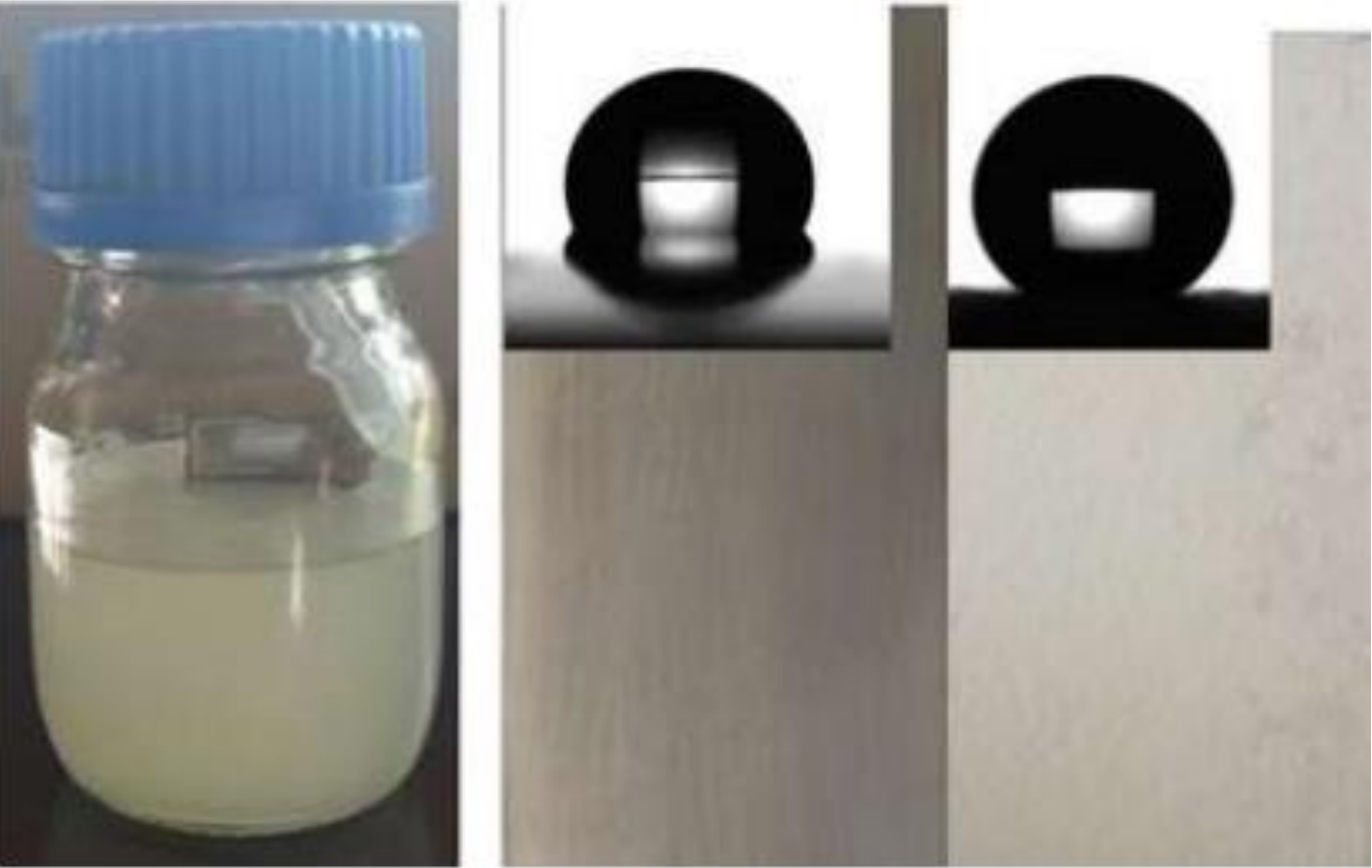
 润滑剂
润滑剂
 润滑油添加剂
 自润滑材料
自润滑材料
 密封材料
密封材料
 新兴材料
新兴材料
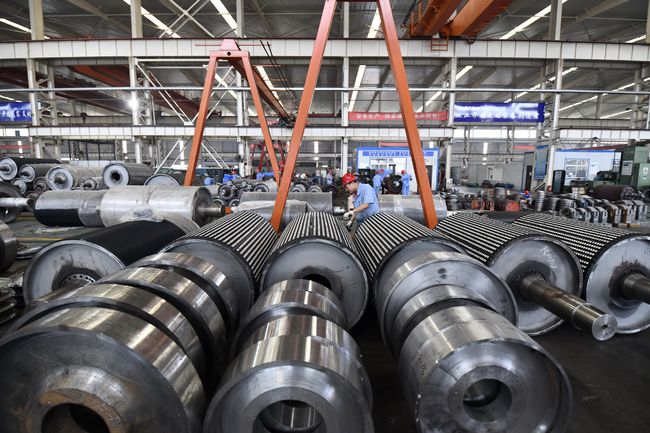 加工设备
加工设备
 摩擦试验机
摩擦试验机
 大型表征仪器
 小型测试设备