Effectively separating oil-water emulsions remains a critical worldwide challenge requiring innovative solutions. In previous studies, we used click chemistry to have a high separation efficiency of oil-water emulsions. However, the degree of reaction between thiols and membranes is difficult to control. Either an excessive or insufficient amount of thiol will have a significant impact on the morphology and properties of the final fibers. Based on this, we developed a novel controllable strategy for the stable superhydrophobic modification of core-sheath micro-nanofibers. We converted the original single-step approach into a sequential two-step process, which involved pre-sulfhydration followed by click chemistry reaction. In detail, we introduced the sulfhydryl group on the surface of fibrous membranes by vapor deposition, and then grafted tetramethyltetravinylcyclotetrasiloxane (V4) on the surface of fibrous membranes by thiol-ene click chemistry reaction. Results showed that the surface of PAN/PVDF@HBPUS-CLICK was rough and had a spherical structure. After we rubbed 50 times, the contact angle was above 153.6° ± 1.1°, the scrolling angle was 8.5° ± 0.7°, showing good wear resistance. In addition, after 50 cycles, the separation efficiency of PAN/PVDF@HBPUS-CLICK fibrous membranes was still above 95%. The results showed the membranes maintained high separation efficiency across low- to high-viscosity water-in-oil emulsions, highlighting the strong application prospects of PAN/PVDF@HBPUS-CLICK for oil-water separation.
周老师: 13321314106
王老师: 17793132604


邮箱号码: lub@licp.cas.cn




 润滑剂
润滑剂
 润滑油添加剂
 自润滑材料
自润滑材料
 密封材料
密封材料
 新兴材料
新兴材料
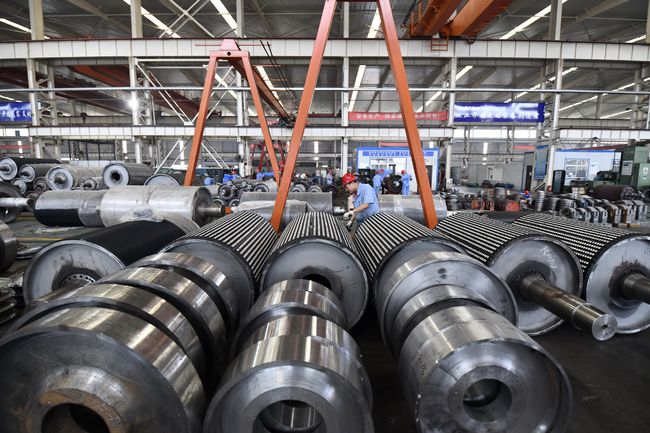 加工设备
加工设备
 摩擦试验机
摩擦试验机
 大型表征仪器
 小型测试设备