Honeycomb-structured and high-Curie-point positive temperature coefficient (PTC) heating elements are promising for thermal management in hydrogen fuel cell vehicles, which require highly safe and efficient hydrogen supply and fuel cell start-up. However, it is still challenging to prepare honeycomb structures by traditional manufacturing methods because of the high dependence on molds and poor mixing uniformity of raw materials. Additionally, the poor curing performance of leaded PTC ceramic slurry tends to hinder the preparation of complex geometries by the emerging digital light processing (DLP) 3D printing. Herein, an innovative method for functionalizing PTC powder, introducing polymethyl methacrylate (PMMA) and Al2O3, and optimizing the honeycomb structure was developed to fabricate high-performance PTC ceramics in this study. Notably, with 10 vol% PMMA and 3 vol% Al2O3, a low room-temperature resistivity (ρ = 42 Ω cm), a high temperature coefficient of resistance (α10–25 = 15.02%/°C) and a large PTC jump (log(Rmax/Rmin) = 4.01) are obtained, showing significant improvement over unmodified printed PTC ceramics (ρ = 225 Ω cm, α10–25 = 8.03%/°C, and log(Rmax/Rmin) = 2.59) while slightly outperforming conventionally pressed PTC ceramics (ρ = 71 Ω cm, α10–25 = 15.89%/°C, and log(Rmax/Rmin) = 3.93). Meanwhile, the experimental and simulation results indicate that the honeycomb structure with 60% porosity exhibits excellent electrical properties, rapid thermal response and strong heat storage capacity for hydrogen supply and fuel cell preheating. Therefore, this work provides a viable strategy for additive manufacturing of advanced functional ceramics with customized structural designs for sensors and heaters.
周老师: 13321314106
王老师: 17793132604


邮箱号码: lub@licp.cas.cn




 润滑剂
润滑剂
 润滑油添加剂
 自润滑材料
自润滑材料
 密封材料
密封材料
 新兴材料
新兴材料
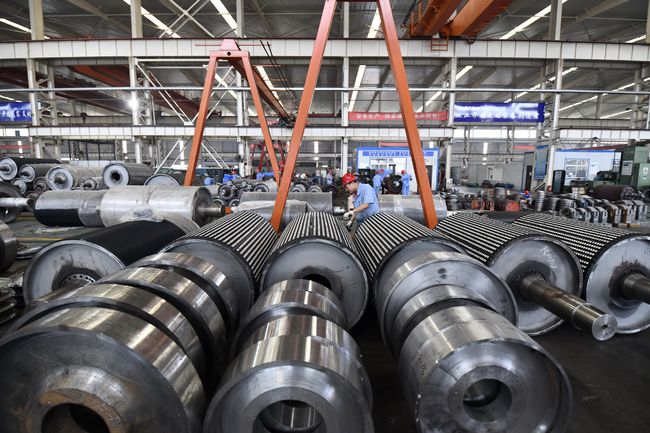 加工设备
加工设备
 摩擦试验机
摩擦试验机
 大型表征仪器
 小型测试设备