Slip flow, exponential thermal-density and second-grade nanofluid over horizontal stretching circular cylinder has many applications in heat exchangers, pipelines, rocket bodies, aircraft fuselages, submarine hulls, offshore structures, and flow bodies of industrial sectors. This research presents the thermal dependent density and chemical reaction effect on MHD second-grade nanofluid motion of heat and mass transmission over horizontal stretching circular cylinder with thermal-concentration slip. The importance of applied magnetic field is used for maximum increment of heat transport. The coupled partial differential equations of second-grade nanofluid are transformed into ordinary differential equations with help of well-defined similarity variable and stream functions. The average and central difference formula of finite-difference method with Newton–Raphson scheme are employed to find numerical outcomes of nonlinear ordinary differential equations through MATLAB software. Several physical parameters such as magnetic field (\({M}_{f}\)), second grade parameter (K1), chemical reaction parameter (Cr), density number (n), thermal slip (BT), and concentration slip (BC) are used for temperature, concentration, and velocity variations. The skin friction rate, local Nusselt number, and Sherwood number are numerical and graphically presented using different physical parameters. It is noted that the velocity profile decreases with increasing magnetic parameter because stronger magnetic field opposes the fluid motion and acts like a braking mechanism. The stronger slip performance in fluid temperature and fluid concentration is observed at each value of thermal slip and concentration slip parameter. The skin friction rate is higher with increasing Prandtl number but Nusselt number decreases with increasing Brownian motion. The magnitude of isothermal contours enhances as chemical reaction and magnetic field enhance under slip conditions.
周老师: 13321314106
王老师: 17793132604


邮箱号码: lub@licp.cas.cn





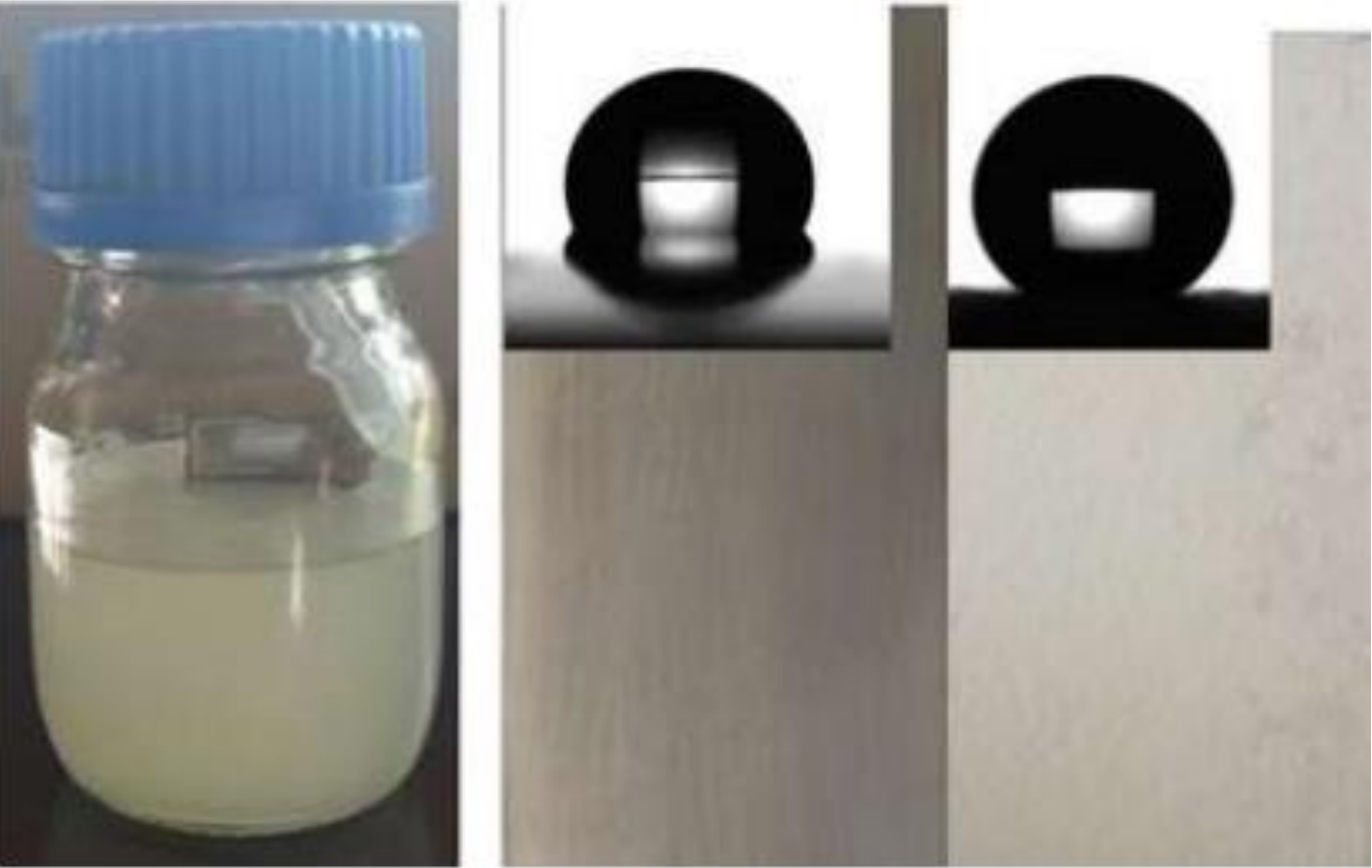
 润滑剂
润滑剂
 润滑油添加剂
 自润滑材料
自润滑材料
 密封材料
密封材料
 新兴材料
新兴材料
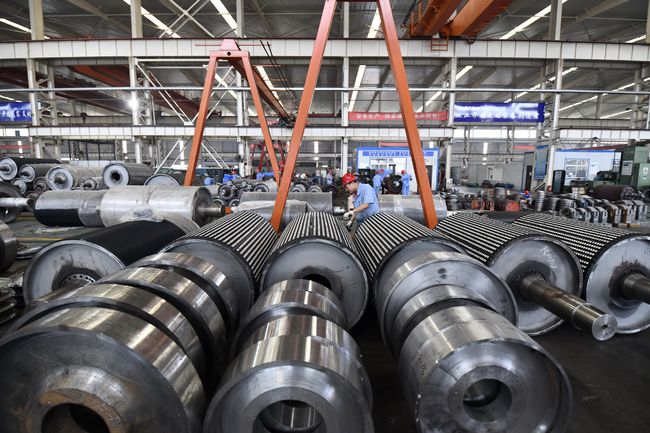 加工设备
加工设备
 摩擦试验机
摩擦试验机
 大型表征仪器
 小型测试设备