This study evaluates the amplitude of fluid temperature and periodic sequence of heat and mass transfer in Au-water nanofluid flow over thin-walled heat exchanger plate. The thermal performance of plate is predicted using exothermic reaction, nonlinear radiation and magnetic field. The convergence and accuracy of fluid temperature is predicted through Levenberg-Marquardt based neural network scheme. The activation energy is applied to improve temperature and concentration rate over plate. The governing model is solved through dimensionless variables, stokes transformation and complex variables. The primitive based steady, real and imaginary models are generated to develop steady and oscillatory flow features of heat ad mass transfer. Implicit finite difference method is used for asymptotic behavior of numerical results with Gaussian elimination approach. The numerical and graphical results of unknown quantities are displayed through various parameters such as exothermic reaction KR, radiation Rd, Richardson number RiT, activation energy EA, and temperature difference δ. The excellent accuracy and convergence of model is predicted at δ = 0.5 with smaller MSE values (~ 10− 9) and lowest performance error 1.75\(\:\times\:\)10−9 at 1000 epochs. The increasing peaks in amplitude of temperature and concentration are noted at higher volume Γ = 0.05. The stronger magnitude of streamlines, isotherms and iso-concentration is depicted as exothermic reaction KR enhances in steady and oscillatory regimes. Steady rate of heat and mass transfer enhances as reaction rate, Richardson number and magnetic number enhance. The stronger oscillating behavior in heat and mass transfer is predicted at higher radiation, activation energy and Richardson number.
周老师: 13321314106
王老师: 17793132604


邮箱号码: lub@licp.cas.cn





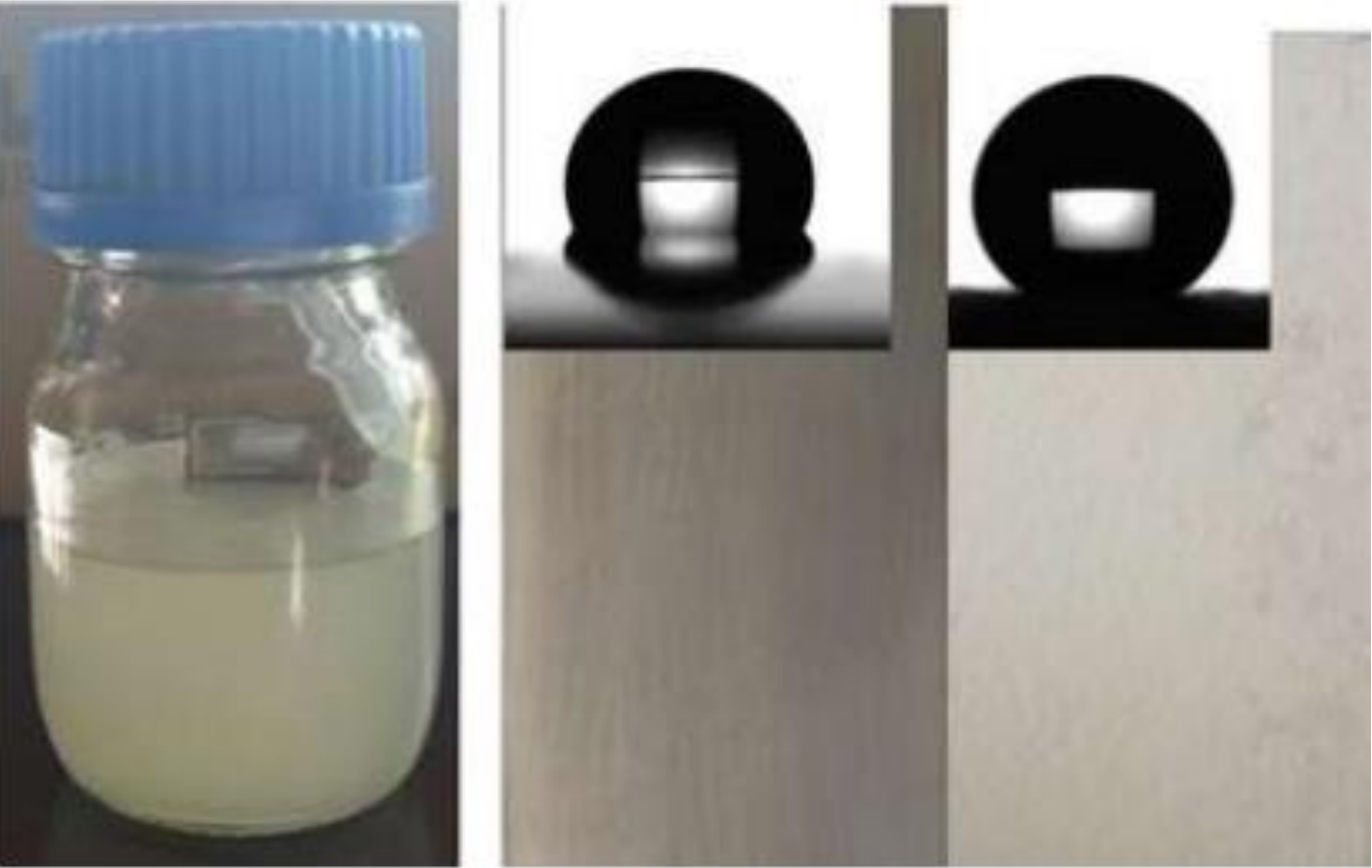
 润滑剂
润滑剂
 润滑油添加剂
 自润滑材料
自润滑材料
 密封材料
密封材料
 新兴材料
新兴材料
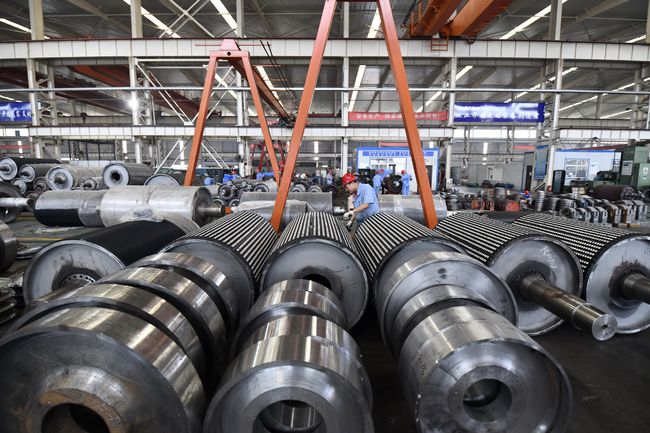 加工设备
加工设备
 摩擦试验机
摩擦试验机
 大型表征仪器
 小型测试设备