High-performance concrete (HPC) is prone to early-age cracking due to its low water-to-binder ratio and high autogenous shrinkage, which compromises its durability and service life. Internal curing technology is regarded as a key approach to address this issue; however, the design and application conditions of its core materials lack systematic investigation. To this end, this study systematically investigates the influence of a novel internal curing material, CICA, on the performance of HPC. Through experiments on mechanical properties, early-age crack resistance, freeze-thaw resistance, and pore size distribution, this paper aims to elucidate the mechanism of CICA and determine its optimal application conditions, thereby providing theoretical and experimental support for the precise regulation of internal curing technology. The results show that there is a good linear relationship between compressive strength and the dosage of internal curing material, with correlation coefficients exceeding 0.9 in all cases. Compressive strength decreases with increasing internal curing material dosage; notably, CICA causes less degradation in later-age strength, whereas SAP and LWA significantly reduce concrete strength. CICA improves the elastic modulus, and the modulus increases with higher CICA dosage. The internal relative humidity (RH) of all groups shows a decreasing trend with increasing curing age, but the rate of decrease is strongly correlated with the type and dosage of internal curing materials. The rate of RH decrease for CICA is significantly slower than that of the control, SAP, and LWA groups. The plastic cracking inhibition capacity of the three internal curing materials ranks as CICA > lightweight aggregate > SAP, with the 2% CICA dosage presenting the optimal hydration promotion effect. As the number of freeze–thaw cycles increases, the relative dynamic elastic modulus of CICA internally cured concrete decreases for all dosages. The durability index also decreases with increasing CICA dosage. Moreover, the particle size distribution of CICA significantly affects the relative dynamic elastic modulus and durability index. Within the 0–500 μm range, the durability index increases with particle size, while beyond 500 μm it decreases, indicating a detrimental effect on freeze-thaw resistance. CICA shifts the pore size distribution curve of concrete to the left (compared with the reference concrete), which is similar to the trend observed for SAP. As the CICA dosage increases, the peak porosity first decreases and then increases. For large pores (> 5000 nm) and macropores (100–5000 nm), pore content exhibits a clear U-shaped trend with increasing strength, decreasing initially before rising again, with high coefficients of determination. The content of nanopores (< 10 nm) remains nearly constant across the strength range, showing an excellent fit to the quadratic model (R2 = 0.9336). In summary, CICA outperforms SAP and lightweight aggregate in balancing mechanical properties, crack resistance, and freeze–thaw durability. The optimal application condition is 2% CICA dosage with particle size below 500 μm. These findings establish a basis for precise internal curing design to mitigate early cracking and extend the service life of high-performance concrete.
周老师: 13321314106
王老师: 17793132604


邮箱号码: lub@licp.cas.cn




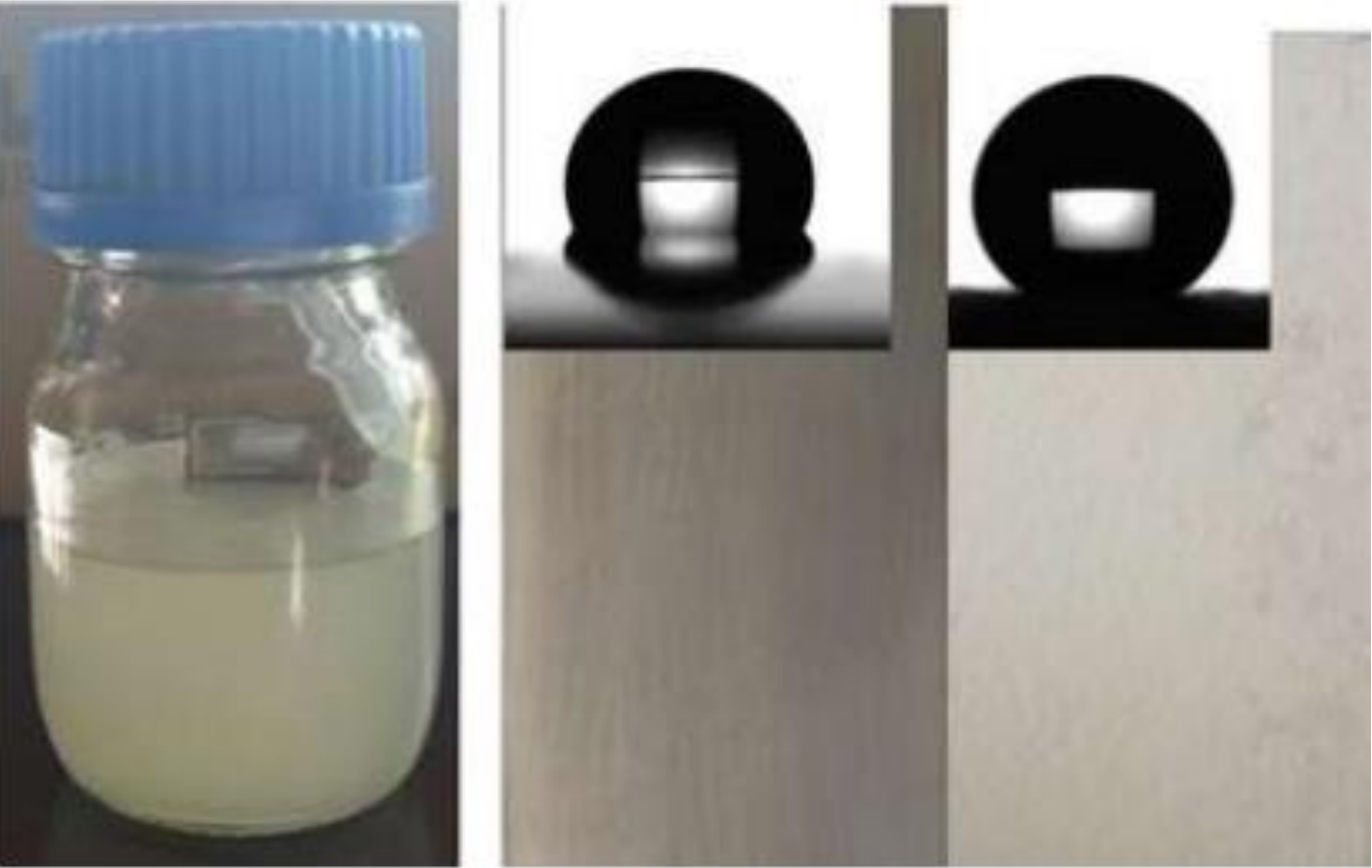
 润滑剂
润滑剂
 润滑油添加剂
 自润滑材料
自润滑材料
 密封材料
密封材料
 新兴材料
新兴材料
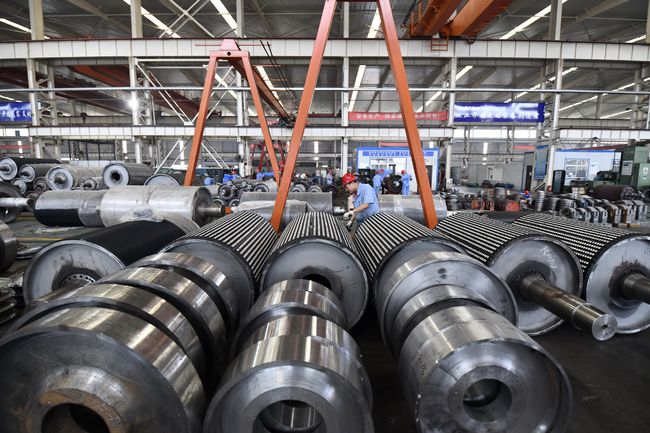 加工设备
加工设备
 摩擦试验机
摩擦试验机
 大型表征仪器
 小型测试设备